The Road Traffic Act of Tanzania marks the beginning of vehicle transport regulation in Tanzania. It describes the governing policies and outlines the rights, duties, and sanctions associated with road usage, vehicle operation, and driving conduct. As a motorist, car owner, or road user, knowing the law as per this act will help you comply and keep safe. In this article, we will discuss what is the Road Traffic Act, its main features, penalties associated with violation, as well as some other common questions.
What is Road Traffic Act?
The Road Traffic Act is the law that regulates all the constituents of road transport in the whole of Tanzania. This law gives traffic police and road authorities the right to manage the roads and punish the offenders for road safety and order.
Road Traffic Act Regulations
Part I – Preliminary Provisions (ss. 1-7)
1. Short Title
This Act is cited as the Road Traffic Act.
2. Interpretation
Term
Meaning
Bicycle
A vehicle with at least two wheels, propelled by pedals or hand cranks using human energy.
Bridge
Includes culverts
Carriage
Includes wagons, carts, bicycles, tricycles, but excludes: Motor vehicles, Vehicles on railways/tramways, Trailers, Baby carriages, Wheelbarrows
Carriageway
Part of a road used by vehicular traffic (excludes pedestrian crossings).
Certified driving instructor
A person certified by a prescribed institution to teach driving.
Commercial vehicle
Motor vehicle used for transporting goods or employees in trade/agriculture.
Competent institution
Prescribed by the Minister to certify driving instructors.
Controlled intersection
Intersection regulated by signs, signals, or police.
Dealer
A person trading in or repairing motor vehicles/trailers for financial gain.
Driver
For motor vehicles: The person driving or in charge (includes instructors). For animals: A person guiding cattle or draught animals. For towed vehicles: The driver of the towing vehicle.
Driving license:
License issued under Part III.
Driving school
As defined in the Motor Vehicles Driving Schools (Licensing) Act.
Engineering plant
Movable plant/equipment designed for engineering operations.
Examining officer
Appointed under section 4.
Excess charge
Additional fee for exceeding parking time limits.
Goods vehicle
Motor vehicle adapted for transporting goods.
Initial charge
Standard parking fee for the prescribed time.
Intersection
Level crossroad, junction, or fork.
Laden weight
Actual weight of a loaded vehicle (including driver/passengers).
Lane
Longitudinal strip of a carriageway for a single line of vehicles.
Learner driver’s license
License issued for driving under supervision.
Level crossing
Intersection between a road and railway.
Maximum permissible weight
Maximum laden weight allowed by the state of registration.
Minister
Minister responsible for road traffic.
Moped
Two/three-wheeled vehicle with engine ≤50cc and max speed ≤50 km/h.
Motorcycle
Motor vehicle with <4 wheels, unladen weight ≤400 kg.
Motor vehicle
Self-propelled vehicle for road use (includes engineering plant).
One-way street
Road where driving is restricted to one direction.
Owner
Registered owner in the Registrar’s records. Hirer under a hiring/hire-purchase agreement. Driver/person in charge if unregistered.
Partner States
Tanzania, Uganda, Kenya.
Passenger vehicle
Vehicle solely for carrying passengers and their effects.
Pedestrian crossing
Designated crossing marked by traffic signs.
Plying for hire
Includes standing on taxi ranks, advertising for hire.
Points system
Numerical values assigned to driving offences based on severity.
Prescribed
Defined by regulations under this Act.
Prescribed limit
As per section 49 (blood alcohol limit).
Private omnibus
Passenger vehicle (not public service) seating >7 (excluding driver).
Public omnibus
Public service vehicle carrying passengers for hire/reward.
Public service vehicle
Motor vehicle carrying passengers for hire/reward.
Rental vehicle
Public service vehicle hired on a daily/weekly/journey basis.
Road
Includes highways, streets, bridges, car parks, footpaths (excludes private driveways).
Semi-trailer
Trailer partly resting on a motor vehicle.
Street parking place
Parking on road land.
Off-street parking place
Parking on non-road land.
Taxi-cab
Public service vehicle seating ≤6 passengers (excluding driver).
Tractor
Self-propelled vehicle for towing (not carrying loads).
Traffic sign
Any object/mark conveying warnings, restrictions, or information.
Trailer
Vehicle designed to be towed (excludes sidecars/engineering plant).
Unladen weight
Vehicle weight without load/driver but with fuel/tools.
Vehicle
Any machine moved on roads (animal/mechanical/electric-powered).
Vehicle inspector
Appointed under section 4
(a) – Administration (ss. 3-4)
3. Registrar of Motor Vehicles
The Minister for finance may appoint a Registrar of Motor Vehicles via Gazette notice.
The Minister may also appoint Deputy Registrars for specified regions.
4. Other Traffic Officers
The Minister shall appoint:
Vehicle inspectors
Examining officers
May appoint other necessary officers via Gazette notice.
(b) – Records (ss. 5-7)
5. Registers
The Registrar shall maintain registers (records) for:
Registered motor vehicles/trailers
Issued driving licenses
Deputy Registrars shall keep regional registers.
Registers are open for inspection by police officers.
6. Searches
Registers are open to the public during prescribed hours upon fee payment.
7. Certified Copies
Registrar provides certified register entries upon fee payment.
Certified copies are prima facie evidence in court.
Part II – Registration of Motor Vehicles (ss. 8-18)
8. Use Without Registration Prohibited
No unregistered motor vehicle/trailer (unless exempted) may be used on roads.
Offence:
Fine: ≤ 50,000 TZS
Imprisonment: ≤ 5 years
Court may order forfeiture (take vehicle under custody) of the vehicle.
9. Classification of Motor Vehicles
Vehicles should be classified (categorize) as prescribed(ordered) by the Minister for finance.
Hover vehicles are deemed motor vehicles.
Minister may modify Act provisions for hover vehicles via regulations.
10. Application for Registration
Owner should apply with prescribed form and registration fee for the registration of vehicle or trailer.
No registration for persons:
Under 18 years (except 14+ for motorcycles).
Person that is declared of unsound mind (akili isiyo na akili). However, if a person is legal guardianselected as trustee can register himself as owner in place of person that is declared as of unsound mind.
11. Registration Process
Registrar verifies:
Vehicle condition: The vehicle or trailer condition is good and fit for the purpose it is going to be used.
Lawful import: It is imported lawfully
Tax/duty payment: Tax or duty fee is paid.
Assigns identification marks and issues certificate of registration.
Joint ownership must register all owners (no business names).
Offence:
Fraudulent alteration/use of identification marks.
Fine: ≤ 10,000 TZS
Imprisonment: ≤ 2 years
12. General Registration for Dealers
Dealers may apply for a general certificate of registration (conditions apply).
Regulation authorities may assign general identification marks.
Offence: Using more vehicles than authorized.
Penalty: As per section 8.
13. Carrying Registration Certificate
Driver must carry original/duplicate registration certificate and produce (show) it upon police request.
14. Identification Marks
Obscured/Missing Identification Marks: A person who is guilty of an offence under this section of obliterating, erasing or causing to become obscure (unclear) a mark shall not be liable to punishment on that charge if he satisfies the court that he took all practicable steps to prevent the elimination or obscuration of the marks.
Defense: Took reasonable steps to prevent obscurity.
If a vehicle’s markings are temporarily blurred or unclear, and this situation arises due to the driver’s act or omission, the driver, not the owner, will be guilty of the crime.
Notify Registrar: If a registered motor vehicle or trailer is broken down or destroyed, its registered owner must notify the registrar in writing within thirty days of the incident, with whom the vehicle is registered, and return the registration certificate relating to the vehicle to the registrar.
Vehicle Being Shipped: If a registered motor vehicle or trailer is being permanently shipped out of Tanzania, its registered owner must first notify the relevant registrar and return the relevant registration certificate of the vehicle to the registrar.
Offence:
Fine: ≤ 5,000 TZS
Imprisonment: ≤ 12 months
15. Presumption of Ownership
Registered person presumed owner unless proven otherwise.
16. Change of Ownership
Seller must notify Registrar within 7 days (provide buyer details).
Exemption: Hiring ≤ 3 months if owner pays driver.
Repossession under hire-purchase treated as sale.
Registrar updates register and issues amended certificate.
17. Exemptions
Minister may exempt persons/vehicles from registration requirements via Gazette order.
18. Offences and Penalties
Offences:
Using unmarked vehicle
False information on registration/mileage
Altering mileage recorder
Unauthorized use of dealer’s marks
Failing to surrender registration certificate
Non-compliance with section 16(1)
Penalty:
Fine: 10,000 TZS
Imprisonment: ≤ 2 years
Part III – Driving Licenses (ss. 19-38)
19. Driving Without a Valid License Prohibited
No person shall drive a motor vehicle without a valid driving license or learner’s license.
No owner/person in charge shall permit unlicensed driving.
20. Classification of Motor Vehicles for Driving Licenses
Vehicles classified as prescribed.
Regulations may allow driving of multiple vehicle classes under one license.
21. Learner Drivers’ Licenses
Registrar may issue a learner’s license upon:
Application with prescribed fee.
Proof of age (if applicable).
Arrangements for instruction from a driving school/certified instructor.
Valid for 3 months, renewable (max 15 months unless tested).
22. Identification Marks for Learner Vehicles
Vehicles used for learner instruction must display prescribed identification marks.
23. Driving Tests
Learner may apply for a test after 1 month of holding a learner’s license.
Tests conducted by examining officers (fee applies).
Experienced drivers may skip learner’s license requirement.
24. Certificate of Competence
Issued if the applicant:
Is competent to drive the vehicle class.
Has knowledge of the Act, Highway Code, and road signs.
25. Driving Licenses
Application in person with certificate of competence and fee.
Valid for 3 years, renewable.
Lapses if not renewed within 5 years.
Minimum age requirements:
16+ for mopeds.
18+ for most vehicles.
21+ (with 3 years’ experience) for buses/heavy commercial vehicles.
International driving licenses (1949 Geneva/1968 Vienna Conventions) are valid.
If stay exceeds 6 months, international license becomes invalid.
26. Conditional Driving Licenses
May be issued with restrictions (e.g., adapted vehicles for disabled drivers).
27. Mandatory Cancellation/Suspension of License
Court must cancel/suspend license for:
Dangerous driving (s. 40, 41, 42, 44, 52(c)):
First Offence: Cancellation for ≥3 years.
Second and more offence: Cancellation for ≥6 years.
Drunk driving (s. 45):
First Offence: In the First Offence if the blood alcohol level is ≤150mg/100ml the license will be suspended for 6-12 months.
Second offence: In the second offence if the blood alcohol level found ≤150mg/100ml) the license will be suspended for 2-3 years.
Third offence: In more than three offences if the blood alcohol level found ≤150mg/100ml the license will be cancelled for ≥3 years.
First Offence: In the First Offence if the blood alcohol level is offence the >150mg/100ml) the license will be cancelled for ≥3 years.
Second offence: In the second and more offences if the blood alcohol level is offence >150mg/100ml the license will be cancelled for ≥6 years.
Speeding (s. 50, 52(d)):
First Offence: Suspension for 3-12 months.
Second + offence: Suspension for 12-36 months.
Driving while disqualified (s. 52(a)(b)):
First Offence: Disqualification for 1-6 years.
Second+ offence: Disqualification for 6-10 years.
Obstructing official motorcade (s. 43): Suspension for ≥12 months.
Court must endorse conviction details on the license.
28. Discretionary Powers of Cancellation/Suspension
Court may cancel/suspend for:
Careless driving (s. 43, 51): Up to 6 months.
Repeat offenders (s. 51 + prior convictions): Up to 2 years.
Driving with endorsed license: Up to 1 year.
Police (≥Assistant Superintendent) may suspend for 6 months if driver continues violations.
Police may suspend license pending court decision if driver:
Caused death.
Was drunk driving.
Fled an accident scene.
Police may issue warnings before suspension.
Appeal allowed (but no driving during appeal).
After suspension, driver must retake test.
Appeals:
Police suspension → Subordinate Court.
Subordinate Court → High Court.
Convictions must be endorsed on the license.
29. Endorsements
Court may endorse convictions (other than Part VI offences).
Endorsement valid for ≤2 years.
30. Appeals
Appeal against cancellation/suspension/endorsement follows standard conviction appeal rules.
31. Issue of Duplicate Driving Licenses
Registrar issues duplicate if license is lost/damaged (fee applies).
If original found, return duplicate.
Duplicate includes previous endorsements.
Offence: Applying for a new license to hide endorsements.
Fine: ≤ 10,000 TZS
Imprisonment: ≤ 2 years
After 3 years without endorsements, entitled to clean license.
Suspension/disqualification periods excluded from the 3-year calculation.
32. Surrender of License for Cancellation/Endorsement
Driver must surrender license to court for cancellation/endorsement.
33. Custody of Cancelled/Suspended License
Court sends notice to Registrar and forwards the license.
34. Application After Cancellation
Treated as a first-time applicant (must retake tests): when again apply for driving license you would need to retake the test and you must pass it in order to get your license.
35. Removal of Disqualification
After 12 months, may apply to High Court for removal.
Court considers:
Character.
Conduct post-conviction.
Nature of offence.
If refused, no reapplication within 6 months.
If granted, endorsement updated; applicant may pay costs.
36. Automatic Disqualification
Disqualification in Kenya/Uganda applies in Tanzania.
37. Offences
Offences:
Using an unlicensed instructor.
Instructing without a valid license.
Learner driving without supervision.
Learner vehicle without proper markings.
False statements in license applications.
Penalty:
Fine: ≤ 10,000 TZS
Imprisonment: ≤ 2 years
38. Driving While Disqualified
Offence: Applying for/obtaining a license while disqualified.
License is invalid.
Police may arrest without warrant if driving while disqualified.
In case of careless/reckless/dangerous driving which caused serious accident will be considered as serious offense and the driver will be sent to jail and will be fined too.
43. Obstructing Official Motorcade
Must yield to motorcades (police/escorted vehicles).
Official motorcade = 2+ vehicles with police escort.
Drivers must:
Stop at extreme left (depending on lanes).
Remain stationary if motorcade is passing.
44- 45. Drunk Driving Over Blood-Alcohol Limit
Prescribed limit: 80mg alcohol/100ml blood.
Defense: No likelihood of driving while over limit.
Commercial vehicle drivers:
If a person found drinking on duty the person will be fined 10,000–20,000 TZS or jail 1–3 yrs.
If a person found providing alcohol to drivers the person will be fined 10,000–20,000 TZS or jail 6m–2 yrs.
46. Blood Tests for Alcohol
Police may require blood test if:
Suspected of drunk driving.
Involved in an accident.
If a person refuses for alcohol blood test and it will be considered as offence.
46A. Breath Tests
Police may use approved breathalysers.
Breathalyser reading = conclusive evidence.
46B. Use of Alcometer
Police may use alcometer for breath tests.
If a person refuses for alcohol blood test and it will be considered as offence.
47. Blood Withdrawal & Analysis
Only medical practitioners/nurses may withdraw blood.
Analysis must follow approved methods.
Accused may request independent test.
48. Detention Until Sober
Police may detain until blood alcohol ≤ prescribed limit.
49. Prescribed Alcohol Limit
Allowed blood alcohol level is 80mg alcohol/100ml blood.
50. Careless/Inconsiderate Driving
If driver found involved in obstructing traffic it will be considered as offence.
Lane discipline rules:
Keep left on carriageways.
Overtake on right (unless turning vehicle).
Maintain safe distance.
Yield to buses at stops.
No sudden braking (unless emergency).
Give way at intersections
51. Speeding
If a driver found exceeding prescribed speed limits it will be considered as traffic offence.
Speed radar evidence admissible.
Public service vehicles must have speed governors.
Speed limits:
Built-up areas: ≤ 50 km/h.
Heavy vehicles (>3,500kg): ≤ 80 km/h.
Road races require police approval.
52. Driving Without a Valid License
No license or learner driving unsupervised (without instructor)
Driving while disqualified (cancelled license).
Driving while suspended (with suspended driving license).
Driving with expired license.
53. Speed Limit Not a Defense
Compliance with speed limit ≠ defense for other offences.
54. Emergency Vehicles
Exemptions for emergency vehicles (with sirens/lights).
Drivers must still drive safely.
Other vehicles must yield to emergency vehicles.
55. Stopping at Railway Crossings
Mandatory stop for:
Passenger vehicles.
Vehicles carrying explosives/inflammables.
Exemptions:
Police-controlled crossings.
Barriers/warning devices.
56. Driving Too Slowly
If driver found involved in unreasonably slow driving and resulted in obstruction it will be considered as offense.
57. Duties After Accidents
Stop & assist injured persons (if safe).
Report to police within 12 hrs. (if injury/death).
Exchange details (if no injury).
Police may remove registration plates if vehicle unsafe.
58. Dangerous Riding Positions
Prohibited:
Riding on footboards/roofs.
Unsafe passenger carriage.
Carrying infants near driver.
59. Pillion Riding Restrictions
Motorcycles driver is advised to carrymaximum 1 passenger (on proper seat).
60. Obstructing Driver
No molesting driver while moving.
No overcrowding.
61. Damage to Vehicles
Throwing objects/impeding vehicles will be considered as offence.
62. Taking Vehicle Without Consent
Using someone’s vehicle with permission or if a person found involved unauthorized use of a vehicle it will be considered as offence.
Court may order compensation (≤ 5,000 TZS).
62A. Forfeiture & Disqualification
Court may forfeit vehicle (demand penalty) used in crime and also disqualify driver for 10 yrs.
Defense: Owner proves no knowledge/consent.
Part V – Control of Traffic (ss. 64-72)
64. Traffic Signs
Engineer-in-Chief may erect traffic signs (prescribed design/placement).
Signs presumed lawful unless proven otherwise.
No unauthorized signs that confuse/dazzle drivers.
If a person found involved in damaging traffic signs it will be considered as offence and will be asked for compensation for repairs.
In processions you can only take less than 200 people on 50 vehicles.
If you Loose animals on the roads that caused traffic disturbance or caused obstruction it will be considered as offence (fine ≤ 1,000 TZS).
67. Temporary Speed Limits
Minister may impose temporary speed restrictions via Gazette notice.
68. Road Closures
Minister may close roads to all vehicles via Gazette order in case of emergency.
69. Traffic Restrictions
Minister may restrict roads to specific vehicle classes.
70. One-Way Traffic
Minister may designate one-way roads via Gazette order.
71. Parking Places
Minister may designate parking areas via Gazette order.
71A. Parking & Standing Rules
Prohibited parking:
Near intersections (<5m).
At bus stops (<15m).
Blocking driveways.
On pavements.
Secure parked vehicles (set brakes).
Warning devices required for stationary vehicles at night.
No parking on motorways/ramps (except emergencies).
72. Special Parking Zones
Minister may designate:
Bus stops.
Taxi stands.
Loading zones.
Part VI – Enforcement (ss. 73-95)
73. Police Duties
Regulate traffic, prevent obstructions, divert vehicles in emergencies.
Police instructions override signs/markings.
74-76. Traffic Records
Police must maintain:
Offence records.
Accident reports.
Annual safety reports to Minister.
77. Production of Driving License
Driver must carry license and must produce within 3 days if requested.
78-80. Identification of Drivers
Police may demand:
Driver/owner details.
Employer records of drivers.
81-83. Vehicle Examinations
Police/vehicle inspectors may:
Examine unsafe/overloaded vehicles.
Order repairs or condemn unfit vehicles.
84-86. Removal of Vehicles
Police may remove:
Abandoned vehicles (auctioned if unclaimed).
Broken-down vehicles (owner pays costs).
Illegally parked vehicles.
87. Detention for Investigation
Police may detain vehicles suspected in crimes.
88-89. False Information & Obstruction
False statements to police.
Obstructing officers.
Failing to comply with orders.
Part VII – National Road Safety Council (ss. 96-99)
96. Establishment
Council members: Chairman, vice-chairman + ≥10 appointed by Minister.
97. Functions
Promote road safety via:
Research on accidents.
Public education.
Legislative proposals.
98-99. Regulations
Minister may make rules for:
Council operations.
Regional safety committees.
Funding/prizes for safety initiatives.
Part VIII – Miscellaneous (ss. 100-118)
100-102. Non-Motorized Vehicles
Animal-drawn carts or bicycles: Animal drawn carts and bicycles are also subject to traffic rules.
Damage to roads: Owner liable for repair costs.
103-104. Government Vehicles
Road Traffic Act also applies to government vehicles/drivers unless exempted under specific circumstances.
105-106. Animal-Drawn Vehicles
If a person found involved in reckless drunk driving of animal carts it will be regarded as offence.
107-110. Bicycles & Animal Welfare
Bells required on bicycles.
Blind animals cannot be used for draught.
111. Aiding Offences
Passengers aiding offences will be equally considered as responsible as driver.
112-113. Exemptions & Penalties
Minister can grant exemptions.
114. Regulations
Minister can regulate:
Vehicle standards.
Speed limits.
Licensing procedures.
115-116. Delegation
Minister/Registrar can delegate powers.
Importance of Compliance with Road Traffic Act
It is must to follow the Road Traffic Act as it makes sure to:
Avoid heavy vehicle or license fines and penalties
Maintain your vehicle’s proper condition.
Keep your license status checked to avoid license fine.
Prevent vehicle custody and license cancellation.
You can also check your vehicle’s or driving license traffic fine status online at TMS check for free
Conclusion
The Road Traffic Act Tanzania is required in control the welfare and safety concerns discipline and order on the roads. It is a must for every driver and owner of the vehicle to understand and obey this law so as not to endanger other without notice.
If in case of doubt regarding the legal standing of your vehicle, take no time, its verification is accessible online.
Frequently Asked Questions
The Road Traffic Act is a legal outline that administrate vehicle use, driver conduct, and road safety in Tanzania.
You will be fined or jailed. Additionally, your vehicle can be taken into legal custody.
Visit official website of TRA taxpayer portal and enter your registration details to check vehicle status.
Ignoring traffic signals is a serious offense and you will be fined or even your license can be suspended.
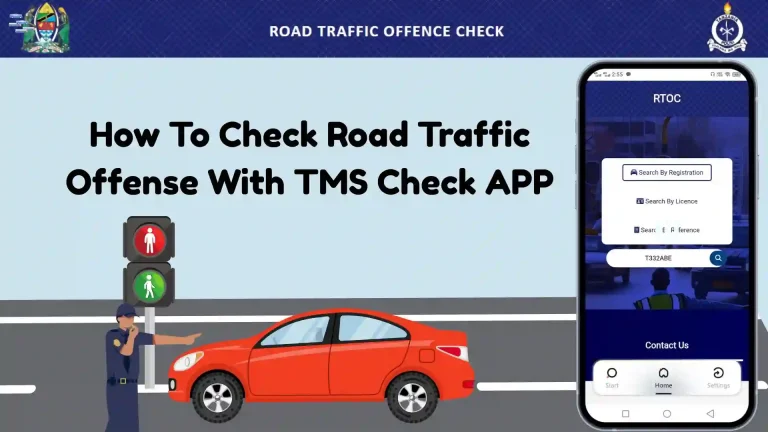
The TMS Check app is an official mobile application which enables Tanzanian citizens to manage and verify traffic offenses, vehicle fines, license status, and other road compliance requirements directly from their smartphones. It reduces the chances of missing fines and payments that are often paid late as well as reduces the physical visits to…
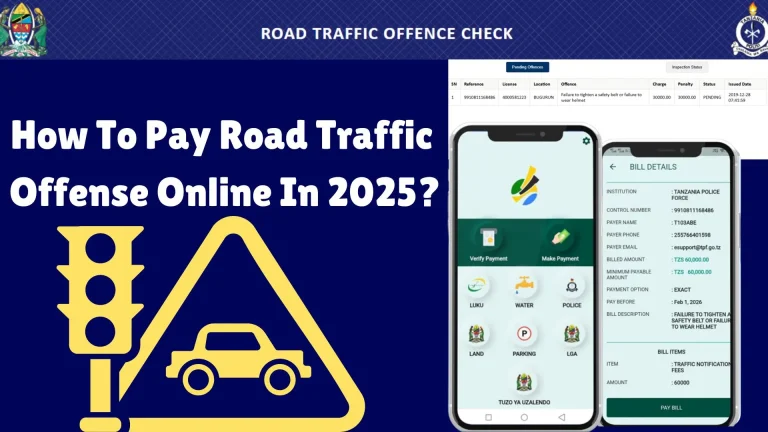
Looking for how to pay traffic fine online? Paying for these services has become easy with the GePG app, which you can use from any location. It has eliminated the need for physical visits to banks and allows you to pay fines quickly. The Government e-Payment Gateway (GePG) in Tanzania lets you easily pay Deni La…
A driver’s license is an important document issued by the relevant authorities in any country. In Tanzania, the Tanzania Road Transport and Highways Authority (SUMATRA) and the Tanzania National Road Transport Agency (TANROADS) are responsible for issuing and administering driver’s licenses. In this article, we will provide you with detailed information on how to check driving license, its…
For all vehicle owners in Tanzania, it’s important to keep their vehicle registration details updated and also verify its status. Whether you are buying a used vehicle, validating the details of ownership, or simply wanting to check if your vehicle is registered legally, the TRA and other relevant institutions have done their best to ensure…
For motor vehicle drivers, keeping track of the status of their driver’s license is very important, especially when it comes to road debts. Tracking license debt online is an easy and safe way to ensure that you are complying with the law without any hassle. In this article, we will provide you with a detailed…
Jinsi ya Kupata Police Clearance ? A Police Clearance Certificate (PCC) is one of the most crucial documents in Tanzania that attests to your past and legal status. This certificate is a typical requirement for travel, employment, and legal matters. This article will provide you with an in-depth overview of the Police Clearance Certificate, including…